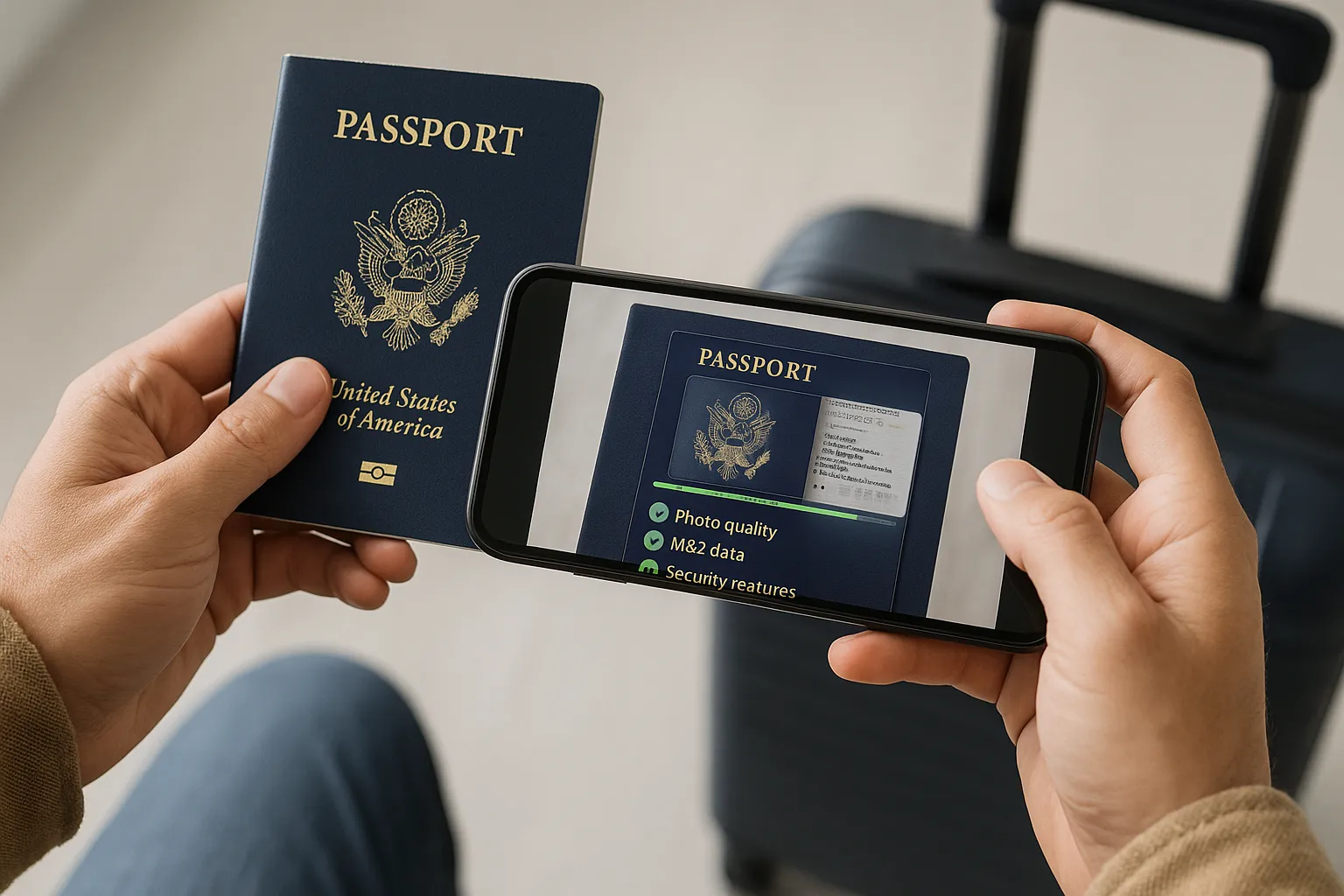
Metamaterials — artificially engineered structures designed to manipulate electromagnetic waves in ways natural materials cannot — have moved from theoretical physics labs to practical applications in stealth technology, wireless communications, and advanced sensors. Their unique property of creating negative refractive indices or near-perfect absorption opens a promising path for the next leap in passport security: making the embedded RFID/NFC chip in e-passports effectively invisible to unauthorized readers without relying on crude metallic meshes or user-dependent covers.
Current e-passports already incorporate basic radio-frequency (RF) protection. Most designs embed a thin metallic grid or foil within the cover pages, creating a partial Faraday cage effect that dramatically attenuates signals when the booklet remains closed. This passive shielding — introduced as early as the mid-2000s in U.S. e-passports — forces the document to be physically opened before the chip can be interrogated, combining physical control with cryptographic protocols such as Basic Access Control (BAC) or Extended Access Control (EAC). While effective against casual skimming attempts in crowded places, these solutions have clear limitations: once opened, the chip becomes readable at short range (typically 5–10 cm), and determined attackers equipped with high-sensitivity readers can still probe in controlled environments.
Metamaterials offer a fundamentally different approach. Instead of broad-spectrum metal blocking, sub-wavelength resonant structures (often patterned arrays of split-ring resonators, fishnet layers, or dielectric-metal composites) can be tuned precisely to the 13.56 MHz frequency band used in contactless passport chips. Such designs achieve near-perfect reflection or absorption only at the target frequency while remaining largely transparent to visible light and other RF bands — an elegant solution for integration into thin polycarbonate or synthetic cover layers without adding noticeable bulk or changing the document’s appearance.
Early research into metamaterial-based absorbers has demonstrated reflection coefficients below –30 dB at HF frequencies, meaning over 99.9% of incident energy is either absorbed or reflected away from the chip antenna. When embedded as ultra-thin films (50–200 μm) during the lamination process of the eCover inlay, these structures could theoretically render the chip “silent” even when the passport lies open on a table, unless a legitimate reader applies the correct mutual authentication sequence. This selective frequency response represents a significant upgrade over static metallic meshes, which can cause signal degradation even for authorized border equipment if not carefully calibrated.
Despite these advantages, several engineering and practical challenges remain before metamaterial shielding becomes reality in mass-produced passports. Fabrication must achieve nanoscale precision across large areas at costs compatible with the roughly $3–8 production budget per e-passport booklet. Environmental durability — resistance to bending, heat, humidity, and 10-year wear — poses another hurdle, as many metamaterial prototypes degrade under mechanical stress or temperature cycling. Finally, any new shielding layer must be compatible with existing ICAO standards (Doc 9303) and not interfere with the read range or reliability required at automated e-gates (typically 10–20 cm).
Even if technically feasible, the move toward metamaterial-based “true silence” raises broader questions about the future balance between privacy and usability. Stronger passive protection could reduce reliance on cryptographic handshakes, potentially simplifying border processing while simultaneously addressing public concerns about contactless skimming — concerns that have driven sales of aftermarket RFID-blocking sleeves for years. Yet over-shielding risks creating compatibility issues with legacy readers or forcing expensive upgrades across global border infrastructure.
The pursuit of metamaterial RF shielding also intersects with real-world vulnerabilities that go far beyond physics. While technical barriers to unauthorized reading are crucial, numerous documented cases illustrate that the weakest link often lies elsewhere: insider corruption that produces completely legitimate-looking passports carrying false identities. When officials accept bribes to issue genuine documents registered in national databases, all embedded security features — holograms, biometric chips, RF shielding — become moot because the passport passes every automated and manual check. Such corruption has been exposed repeatedly across continents, from large-scale schemes in South Africa and Malaysia to smaller but equally damaging cases in Western passport offices. These incidents highlight that no amount of metamaterial innovation can protect against a system where gatekeepers themselves become the point of compromise.
Similarly, the devastating human and economic fallout from using fraudulent documents — even when driven by desperation rather than criminal intent — underscores how aggressively enforced border policies amplify the consequences of document failure. Severe penalties, including long prison terms, family separations, lifetime entry bans, and financial ruin, await those caught with counterfeit or corrupted passports, often transforming vulnerable migrants or refugees into lifelong outcasts. As border technologies grow more sophisticated, detection rates rise, yet the underlying drivers of document fraud (persecution, poverty, exploitation by smuggling networks) remain largely unaddressed, perpetuating cycles of suffering far beyond what any shielding layer can prevent.
In conclusion, metamaterial-based RF shielding represents one of the most intriguing paths toward making e-passport chips truly silent against unauthorized access. If researchers and manufacturers overcome the remaining fabrication and durability barriers, passports issued in the early 2030s could incorporate frequency-selective absorbers that render skimming virtually impossible without physical tampering or insider betrayal. Yet the technology must be viewed within the larger ecosystem of identity security: physics alone cannot close gaps created by human corruption or blunt policies that disproportionately punish the vulnerable. The real test for next-generation passports will not be whether the chip can be made silent — but whether the entire system of issuance, verification, and consequence can become fair, resilient, and humane.
Further Reading
- When the Border Slams Shut – A sobering look at the lifelong human cost of using fraudulent travel documents at borders.
- When Gatekeepers Betray: The Corruption Behind “Legitimate” Forged Passports – Explores how insider corruption creates undetectable genuine passports, bypassing all technical protections.
- Evernote Note on Passport & Border Issues – Additional reflections tying technical vulnerabilities to real-world enforcement realities (note content may vary by access).
These pieces together illustrate that while metamaterials could close one specific attack vector, passport security ultimately depends on addressing systemic human and policy failures as much as electromagnetic engineering.
About the Author


