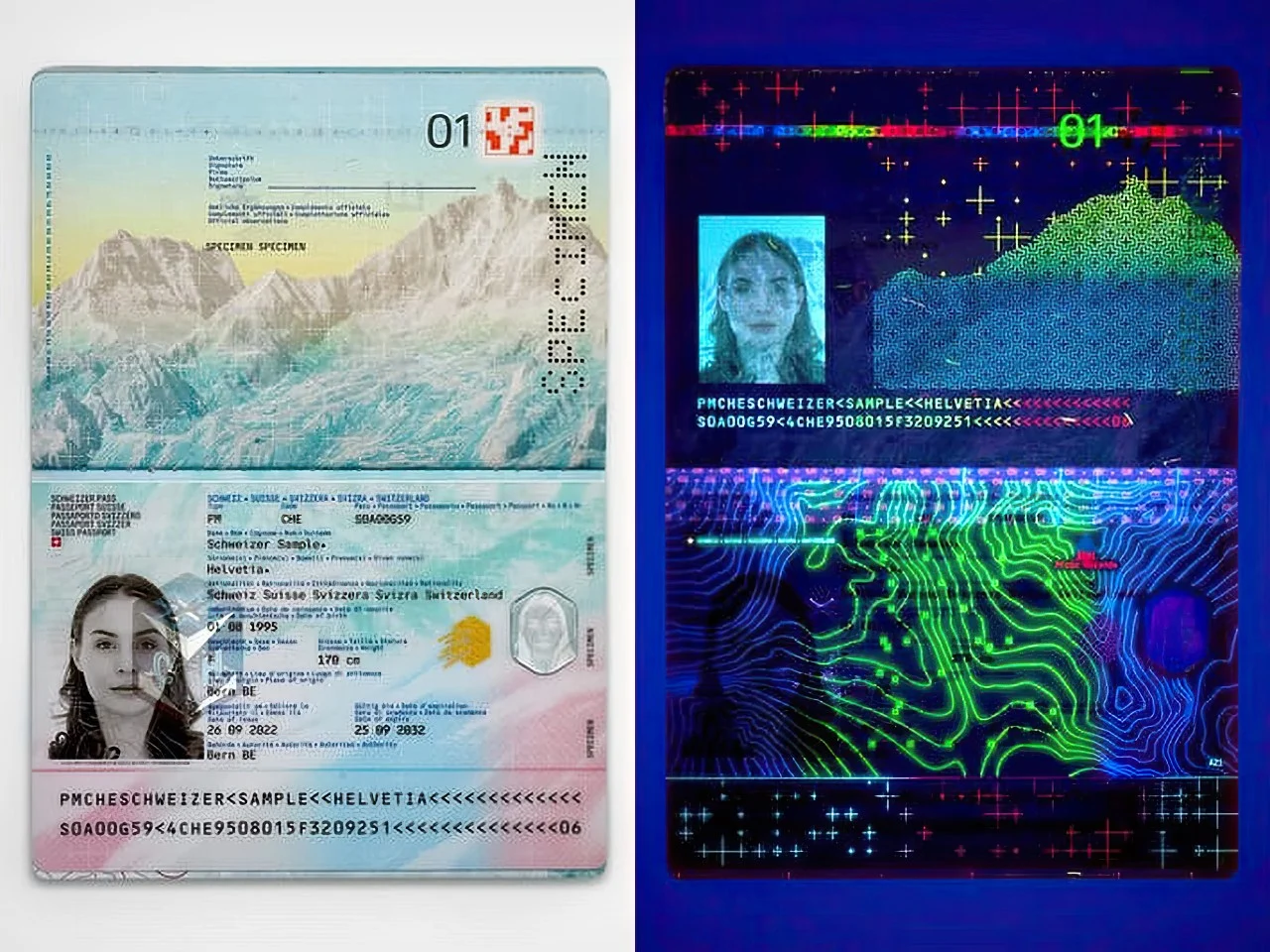
Modern passports incorporate an astonishing array of security elements—holograms, microtext, UV-reactive inks, latent images, tactile embossing, color-shifting foils, machine-readable zones, biometric chips, and often over 60 distinct features when counting variations across pages. While each addition aims to raise the bar for counterfeiters, an under-discussed paradox emerges: too many security features can overload the human inspector, leading to diminished detection rates during visual checks at borders, airports, and immigration counters.
This phenomenon draws from well-established principles of cognitive psychology, particularly decision fatigue and information overload. Border officers, often processing hundreds of documents per shift under time pressure, face a barrage of visual cues. When a passport presents dozens of overlapping security markers, the brain struggles to prioritize and process them effectively, resulting in shallower inspections and higher chances of missing sophisticated forgeries.
The Cognitive Limits of Human Verification
Human attention operates under strict constraints. Studies on visual search tasks show that observers become less accurate when required to monitor multiple targets simultaneously—a situation directly mirrored in passport examination. When a data page contains 20+ overt and semi-covert features (such as guilloche patterns, optically variable devices, and embedded fibers), inspectors may default to heuristic-based checking rather than exhaustive analysis. They glance at the most familiar elements (photo, hologram, MRZ) and move on, subconsciously filtering out the rest.
This filtering is not laziness but a protective mechanism against cognitive exhaustion. Prolonged exposure to complex stimuli leads to mental fatigue, reducing perceptual sensitivity. In high-volume environments like major international hubs, officers report feeling “overwhelmed” by the sheer density of features, especially when passports from different issuing countries vary widely in design. The result: a paradox where adding more layers of protection inadvertently creates blind spots in the human layer of defense.
Security Feature Overload in Real-World Border Scenarios
The issue becomes particularly acute during periods of heightened document fraud. For instance, the massive surge in travel document counterfeiting during and after the COVID-19 pandemic demonstrated how rapidly evolving threats exploit verification weaknesses. Forgers produced high-quality fakes incorporating stolen security elements, yet many slipped through because inspectors, already juggling vaccine certificates, test results, and standard passport checks, experienced compounded overload. As detailed in The Pandemic Passport Surge: How COVID-19 Spawned a New Generation of Document Fraud, border agents faced multiplied requirements that fragmented attention and made thorough visual scrutiny nearly impossible in real time.
Similar dynamics appear in the so-called gray market for second passports and alternative documentation. Legitimate citizenship-by-investment pathways sometimes blur into fraudulent networks, where forged or fraudulently obtained documents mimic genuine ones down to advanced security features. These sophisticated fakes exploit the very overload inspectors experience, as explained in analyses of the gray market, where overlapping legal and illegal ecosystems make authentication even harder under cognitive strain.
Even official resources acknowledge the risk of excess complexity. Training materials and developer guidelines for secure documents repeatedly warn against overloading documents with too many Level 2 or Level 3 features (those requiring tools or close inspection), noting that excess information makes it difficult to isolate essential elements and can lead to false positives in authentication.
Training and Technology: Partial Solutions with Their Own Limits
Many border agencies have responded by emphasizing prioritized feature checklists—focusing on 8–12 “hero” elements per document type—and supplementing human checks with e-gates and automated scanners. While effective for machine-readable data and biometrics, these systems do little for the visual layer, where human judgment remains critical for detecting anomalies like poor hologram alignment or inconsistent micro-perforations.
Training programs increasingly incorporate fatigue management, such as rotation schedules and simulated high-volume scenarios, but they rarely address the core psychological issue: the diminishing returns of feature accumulation. Some experts advocate for feature minimalism in future designs—fewer, but more robust and memorable elements—to restore the effectiveness of human visual verification.
Rethinking the Balance Between Machine and Human Security Layers
Ultimately, passport security must evolve beyond the arms race of adding more features. The psychology of overload suggests a counterintuitive strategy: strategic simplification in visible elements, paired with stronger machine authentication and better cross-border data sharing. When human inspectors are not drowning in visual noise, they perform better at spotting the subtle deviations that even the most advanced forgeries still exhibit.
As fraud techniques grow ever more sophisticated—often borrowing from legitimate production pipelines—the weakest link may not be technology, but the human operator overwhelmed by design choices meant to protect them. Striking the right balance between robust protection and cognitive feasibility could prove the next major advancement in travel document security.
Read also this article: The Ghost in the Machine: How Criminals Are Defeating Biometric Security
In the end, more is not always better. Sometimes, less truly becomes more secure.
About the Author


