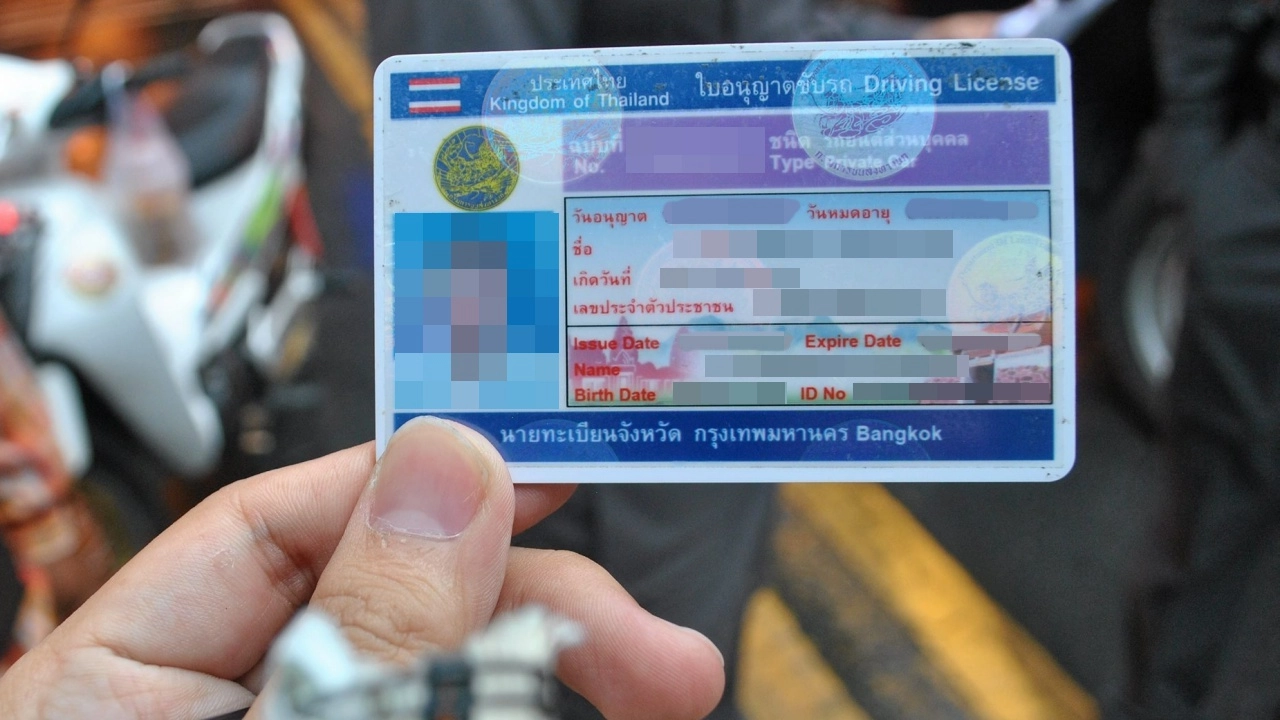
The security of European driving licenses depends on a handful of specialized manufacturers who control the global market for document security materials. This concentration of power raises critical questions about sovereignty, cost, and the actual effectiveness of anti-counterfeiting measures across the EU.
The Oligopoly Behind Your Driving License
When a Polish citizen receives their driving license, few realize that the holographic foil embedded in that card likely came from one of just three companies: France’s Thales (formerly Gemalto), UK-based De La Rue, or Switzerland’s SICPA. This isn’t a coincidence—it’s the result of decades of market consolidation that has left European governments with remarkably few options when sourcing security materials.
The polycarbonate substrates used in modern EU driving licenses present an even starker picture. Germany’s Bayer MaterialScience (now Covestro) and Sabic’s specialty films division dominate this market, controlling approximately 80% of global production capacity for document-grade polycarbonate. These materials aren’t interchangeable commodity products; each manufacturer’s polycarbonate has unique properties that affect laser engraving quality, durability, and compatibility with security features.
This market structure creates a paradoxical situation. While the EU promotes competition and transparent procurement processes, member states find themselves negotiating with suppliers who effectively operate as monopolies in their specialized niches. The technical specifications required for secure identity documents are so stringent that new entrants face prohibitive barriers to entry—both in terms of capital investment and the years needed to achieve certification from European security agencies.
The concentration extends beyond raw materials to complete card manufacturing systems. Only a handful of companies worldwide can deliver turnkey solutions that integrate all required security features. Major players like Mühlbauer ID Services, Bundesdruckerei, and Morpho (now IDEMIA) don’t just supply materials—they often design entire production systems, train operators, and maintain ongoing relationships with government clients that span decades.
The Hidden Costs of Security Theater
The financial implications of this supply chain oligopoly are staggering, yet rarely discussed in public procurement documents. A liter of Optically Variable Ink (OVI)—the color-shifting ink used in many security features—costs between €180-400, depending on the specific formulation and supplier. For perspective, this makes OVI approximately 50 times more expensive than high-end printer ink and weight-for-weight more costly than many precious metals.
Holographic foils, another standard security feature, present equally eye-watering economics. Custom-designed holographic overlays can cost €15,000-50,000 just for the origination of the design and master plates. Then comes the per-unit cost: premium holographic foils range from €0.50 to €3.00 per card, depending on complexity and order volume. For smaller EU member states issuing 200,000-500,000 licenses annually, these costs add up quickly—potentially millions of euros spent annually on a single security feature.
These prices create perverse incentives. When Bulgaria or Romania faces budget constraints, they may opt for older, cheaper security technologies even when newer alternatives offer better protection. The result is a two-tier system within the EU itself, where driving licenses from wealthier nations incorporate cutting-edge security while others rely on features that sophisticated counterfeiters already know how to replicate. This fragmentation is exactly what criminals exploit, as international models from other countries demonstrate more coordinated approaches can prevent.
The economics become even more troubling when examining the actual return on investment. A comprehensive audit of border seizures and fraud detection rates would likely reveal that many expensive security features are rarely checked in practice. Microscopic text that requires 10x magnification or UV-reactive elements that need specialized lighting serve primarily as deterrents—but only if counterfeiters believe authorities actually verify them consistently.
Geopolitical Vulnerabilities in the Supply Chain
Europe’s dependence on a concentrated supply chain creates strategic vulnerabilities that extend beyond economics into national security. The COVID-19 pandemic offered a preview of these risks when supply chain disruptions delayed delivery of security materials to several EU member states, forcing some to temporarily simplify their license designs or extend validity periods rather than issue new documents with reduced security.
The geopolitical dimension becomes clearer when examining ownership structures. While companies like Thales and IDEMIA are European, their supply chains are decidedly global. Rare earth elements used in certain security inks and optical features often originate from China, which controls 70-80% of global production. The specialized polymers, adhesives, and chemical compounds come from facilities scattered across multiple continents, each representing a potential chokepoint.
Brexit added another layer of complexity. De La Rue, historically one of Europe’s primary security printers, now operates outside EU regulatory frameworks. This has complicated procurement processes for EU member states and raised questions about data protection and sovereignty when sensitive biometric information and document designs cross newly established borders. Several countries have quietly diversified their supplier base in response, though options remain limited.
The concentration of expertise presents perhaps the most subtle vulnerability. The engineers and chemists who understand how to formulate modern security inks, design holographic patterns that resist counterfeiting, or optimize laser engraving parameters for polycarbonate represent a small, aging community. Most work for the same handful of companies, creating knowledge silos that governments struggle to access independently. This technical dependence means that member states often cannot even fully evaluate whether the security features they’re purchasing represent the best available technology or simply the best their supplier chooses to offer.
The Procurement Trap: Lobbying and Lock-In
Public procurement processes for driving license production reveal sophisticated lobbying strategies that effectively limit competition despite nominally open tenders. Major suppliers invest years cultivating relationships with transport ministries and national printing authorities, offering “free” consultations on security requirements that—unsurprisingly—align perfectly with their product portfolios.
The technical specifications in tender documents often serve as de facto sole-source procurement mechanisms. When a tender requires “holographic foil with diffraction patterns resistant to attempts at mechanical separation, with optical variable features visible under standard lighting conditions at angles between 15-45 degrees,” it may sound like objective engineering language. In reality, such specifications are frequently written in collaboration with incumbent suppliers and describe their proprietary technologies so precisely that competitors cannot bid without licensing the same systems.
Corruption in this sector takes subtle forms. Direct bribery remains rare in Western Europe, but the line between legitimate business development and improper influence becomes blurry. Expensive study tours to manufacturing facilities, generous consulting contracts awarded to former government officials, and research partnerships with universities affiliated with key decision-makers all serve to maintain the status quo. Expert policy recommendations increasingly call for greater transparency in these relationships, but implementation remains inconsistent across member states.
The maintenance and upgrade cycles create long-term lock-in effects. Once a country invests €5-20 million in a card production facility from a specific manufacturer, switching suppliers becomes prohibitively expensive. The new supplier would need to provide compatible equipment or the government would need to replace the entire production line. This gives incumbent suppliers enormous leverage in contract renewals, allowing them to maintain premium pricing even as their technologies age.
Eastern European member states face particularly acute challenges. Limited budgets mean they often cannot afford the most sophisticated systems, yet they still must comply with EU-wide standards. This creates opportunities for mid-tier suppliers to offer discounted packages—but these deals sometimes involve compromises in security that aren’t immediately obvious. The result is a patchwork of technologies across the EU, with some licenses incorporating 2025-era security features while others use technologies that were cutting-edge in 2010 but are now well-understood by professional counterfeiters.
Emerging Threats: AI and the Future of Forgery
The traditional supply chain faces disruption from an unexpected direction: artificial intelligence is fundamentally changing both the threat landscape and potential solutions. Sophisticated counterfeiters increasingly use machine learning algorithms to analyze security features, identifying the most cost-effective combination of techniques to replicate specific elements while ignoring others that authorities rarely check.
AI serves as both threat and solution in this evolving landscape. Criminal networks use computer vision algorithms to analyze genuine documents, identifying subtle patterns in holographic foils or the exact color-shifting properties of OVI inks. This allows them to create forgeries that pass casual inspection even if they can’t perfectly replicate every security feature. The democratization of AI tools means that techniques once available only to state-level actors are now accessible to organized crime groups with modest technical sophistication.
Paradoxically, the same AI technologies offer potential solutions. Machine learning systems can detect subtle anomalies in documents that human inspectors miss—variations in laser engraving depth, microscopic irregularities in holographic patterns, or statistical anomalies in the distribution of security fibers embedded in card substrates. However, implementing these systems requires breaking free from traditional supplier relationships and investing in new verification infrastructure.
The major security material suppliers are developing AI-enhanced features, but their proprietary nature creates new dependencies. A holographic foil that can only be authenticated using a specific manufacturer’s AI-powered verification app doesn’t enhance security—it simply transfers control from government agencies to private companies. Some EU member states are pushing back, demanding open standards and interoperable verification systems, but progress remains slow.
The next generation of security features will likely involve nanotechnology, quantum dots, and DNA taggants—materials so sophisticated that only a handful of companies worldwide can produce them. This promises even greater concentration in the supply chain unless European governments take proactive steps to develop domestic capabilities or mandate open standards that allow multiple suppliers to compete on implementation rather than proprietary formulations.
Breaking the Oligopoly: Is Reform Possible?
Some European countries are experimenting with alternative approaches that could diversify the supply chain. Estonia’s digital-first strategy minimizes reliance on physical security features by making digital verification the primary authentication method. While physical licenses still exist, they function more as backup credentials than primary identity documents. This reduces dependence on expensive holographic foils and specialty inks, though it requires robust digital infrastructure that not all member states possess.
Pooled procurement represents another potential path forward. If smaller EU nations coordinated their purchases, they could negotiate better terms with suppliers and potentially justify the capital investment needed to bring alternative manufacturers into the market. The European Commission has proposed frameworks for such cooperation, but implementation faces obstacles from national sovereignty concerns and the complexity of harmonizing technical requirements across different legal systems.
Open-source security features sound contradictory, yet some experts argue they could enhance both security and competition. By publishing detailed specifications for certain security elements, governments could enable multiple suppliers to produce compatible materials. The security would come not from secrecy but from the difficulty of precisely replicating complex physical or chemical properties. This approach has worked in other domains—cryptographic algorithms, for example, become more secure through public scrutiny, not less.
The most radical proposal involves vertical integration: establishing EU-level production facilities for critical security materials. This would require substantial upfront investment but could provide strategic autonomy and leverage for negotiating with private suppliers. The European Central Bank’s production of euro banknotes offers a partial model, though scaling this approach to the decentralized world of identity documents presents significant challenges.
Ultimately, breaking the oligopoly requires political will that has so far been lacking. The current system works well enough that disrupting it feels risky, even if the long-term vulnerabilities are clear. Until a major security breach forces reconsideration—a coordinated counterfeiting operation that floods Europe with convincing forgeries, or a supply chain disruption that leaves member states unable to issue licenses—the comfortable relationship between governments and their established suppliers will likely persist. The question is whether Europe will address these vulnerabilities proactively or wait for a crisis to force change.
About the Author


