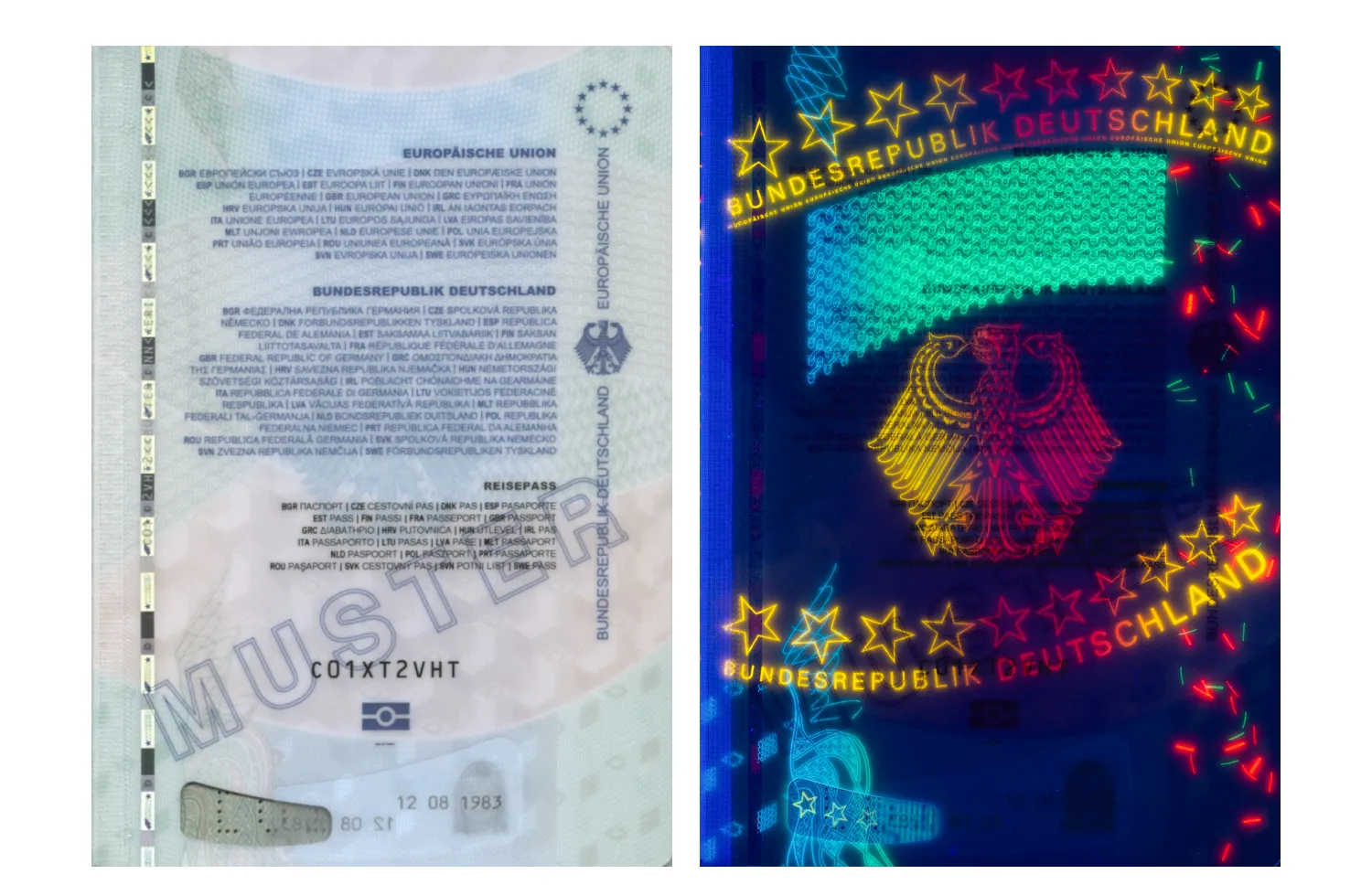
Modern passports contain layers of protection that go far beyond what the naked eye can detect. Among the most elusive are scrambled latent images — specialized optical features that embed personal data in a seemingly chaotic pattern of fine lines, dots, or raster elements. These images remain completely invisible under normal viewing conditions, appearing only when decoded through dedicated hardware filters, proprietary lenses, or advanced image-processing software. Often referred to as Invisible Personal Information (IPI) in technical glossaries, this technique transforms critical holder data — name, surname, document number, nationality code — into a covert watermark integrated directly into the portrait zone or background security printing.
The primary strength of scrambled latent images lies in their dual nature: they are passive (requiring no electronics) yet demand specialized equipment for verification. Border officers equipped with decoding tools can instantly reveal whether the visible data matches the hidden payload, creating a rapid cross-check against potential photo substitution or data alteration attempts.
How Scrambled Latent Images Are Created and Embedded
The production process begins with proprietary encoding algorithms that “scramble” alphanumeric personal data into a pseudo-random visual structure. This scrambled pattern is then printed using high-resolution offset, screen, or even UV-visible special inks onto the polycarbonate data page or synthetic substrate. In many implementations, the encoding is superimposed over the primary portrait photograph, making any attempt to replace the photo disrupt the latent pattern alignment.
Some countries apply the feature more creatively: in certain European passports, the scrambled elements blend into complex guilloche backgrounds, while others confine them strictly to the facial area. Decoding typically involves a physical lenticular filter, moiré-pattern viewer, or smartphone app paired with forensic software that reverses the scrambling process in real time. This multi-modal verification (human eye + machine) significantly raises the bar for would-be forgers who lack access to the exact encoding parameters used by the issuing authority.
Real-World Deployment and Examples Across Countries
Belgium’s 2022 series features a prominent latent scrambled image overlaid on the data-page portrait, revealing the holder’s full name and passport number when viewed through the official decoder. Romania has experimented with UV-only variants on visa pages, where the scrambled data fluoresces under blacklight before decoding becomes possible. Ireland stands out by placing the same technology in background patterns rather than the photo area, demonstrating flexibility in placement to confound predictable forgery attempts.
These implementations are not uniform — ICAO recommendations allow national variation — but the core principle remains consistent: create a hidden, machine-readable duplicate of key biographical data that exists independently of the visible text and chip-stored biometrics.
The Arms Race: Forgers vs. Invisible Personal Data Protection
Despite their sophistication, scrambled latent images are not invincible. High-end forgery networks have attempted to reverse-engineer decoding logic by acquiring leaked filters or analyzing multiple genuine specimens under laboratory conditions. The invisible war between security designers and criminal document producers continues unabated, with each new passport generation forcing forgers to adapt their tooling and supply chains.
The Syrian displacement crisis dramatically illustrated this dynamic. As borders tightened after 2011, demand for fraudulent travel documents skyrocketed, and sophisticated networks began producing “near-genuine” counterfeits using stolen blanks or cloned security features. Reports from that period show how desperation fueled a black market where prices for high-quality fakes climbed rapidly, often incorporating mimicked optical elements that could fool basic visual checks but failed under decoded scrutiny. For deeper insight into this ongoing technological contest, see the detailed analysis in The Invisible War: Inside the High-Tech Battle Between Passport Security and Master Forgers.
Economic Incentives Driving Evasion of Latent Security Layers
The black-market value of bypassing features like scrambled latent images is enormous. Premium forged passports — those capable of passing secondary machine decoding — command prices from several thousand dollars upward, depending on destination country and perceived quality. In some regions, mid-tier fakes replicate visible holograms and microtext but collapse when subjected to latent-image verification, explaining why many intercepted documents fail at the second line of control. A fascinating overview of current pricing trends and quality tiers in the global forgery economy can be found here: The Price of a New Identity: What Forged Passports Cost Around the World.
Why Scrambled Latent Images Remain a Cornerstone of Future-Proof Design
Even as biometric chips and AI facial recognition advance, passive optical features like scrambled latent images retain unique advantages: they require no power, survive physical wear better than chips in some scenarios, and provide an independent data layer that cannot be electronically skimmed or remotely altered. When combined with electronic checks, they form a hybrid defense that forces attackers to compromise multiple distinct systems simultaneously.
Ongoing conflicts and forced migration continue to test these protections. The massive displacement from Syria created fertile ground for document fraud networks to thrive precisely because legal pathways were restricted, pushing vulnerable people toward criminal intermediaries. For a comprehensive look at how such crises amplify the forgery threat and challenge even the most advanced hidden features, read When Borders Close, Forgers Thrive: How Syria’s Displacement Crisis Fueled a Global Document Black Market.
In an era of accelerating innovation on both sides of the security divide, scrambled latent images stand as a quiet but powerful reminder: some of the strongest protections are those that hide in plain sight — visible only to those with the correct key. If you’re interested in contributing observations or data on passport verification practices worldwide, consider participating in ongoing research through this dedicated survey form.
About the Author


